Music Travel Repeat → Unofficial Music Artist Biographies → Parkway Drive
Parkway Drive: Outrunning The Breakdown
The thing about small towns is that they know all your secrets.
Before you even speak them.
Byron Bay isn’t some massive concrete jungle where you can disappear in the crowd. It’s a beach town. A postcard town. The kind of place where you grow up sunburned, salt-soaked, and shoulder-to-shoulder with the same faces your entire life. And that’s a beautiful thing… until the noise inside you gets too loud for paradise to contain.
That’s where Parkway Drive started—right at that crossroads.
Not on a big stage or in a polished studio—but in a garage on Parkway Drive, the street. That’s not poetic license. That’s literal geography. The house wasn’t soundproofed. The gear was probably borrowed. The neighbors? God bless them. But it didn’t matter. Because inside that house, something louder than boredom, louder than expectation, louder than fear was trying to be born.
It was sweaty. It was chaotic. It was home.

The Parkway House didn’t care about clean riffs or commercial potential. It just asked one question: Do you have something inside you that needs to be screamed out?
And thank God, they did.
Winston McCall wasn’t trying to be a rock star. He was trying to survive whatever quiet war was waging inside him. Jeff Ling’s guitar work wasn’t written for arenas—it was written to hold back the flood. Luke Kilpatrick, Ben Gordon, and later Jia O’Connor weren’t just learning their instruments—they were learning how to stay alive in a world that didn’t make room for guys like them.
That house became something sacred.
Not just for the band, but for the entire Byron Bay hardcore scene. It was an altar. A lifeboat. A sanctuary for kids with pent-up rage and nowhere to put it. The kind of place where 30 sweaty teenagers in patched-up jeans could crowd around a drum kit and feel holy for a night.
And that’s where the name comes from—Parkway Drive. It wasn’t branding. It wasn’t brainstormed in a boardroom. It was an anchor. A physical reminder that no matter how far they went, they came from somewhere real.
Their first show wasn’t a spectacle. It was at the Byron Bay Youth Centre—humble, under-attended, probably held together with duct tape and adrenaline. But there was something undeniable about it. That thing you can’t fake. That thing you feel in your chest when someone on stage isn’t performing—they’re bleeding.
That show caught the attention of Michael Crafter, front man of I Killed the Prom Queen, who just happened to be in town. Crafter saw what so many of us would come to know years later: these guys weren’t just another band. They were lightning caught in a blistered, calloused bottle.
The connection sparked quickly. A split CD was released in June 2003—I Killed the Prom Queen / Parkway Drive—a handshake between two generations of Australian heavy music. And just like that, Parkway wasn’t a garage band anymore. They were moving. Touring. Shouting their truth into whatever cracked mic would have them.
And here’s the beautiful, stubborn irony: they never expected it to last. Not in a “we don’t believe in ourselves” way—but in that raw gratitude kind of way. Like every show was a gift they might not get again. Like every broken string and rolled ankle was worth it, because they were doing something real.
They dropped their first EP, Don't Close Your Eyes, in 2004 on Resist Records. It wasn’t flashy. It wasn’t perfect. But it hit like a bottle rocket in a dark room. Six tracks of spit-shined fury and undeniable heart. Winston would later admit he was surprised anyone picked it up—surprised that it did “so amazing for us.”
That’s the thing about being born from a small town and a busted practice space: you never expect anyone to listen. So when they do, it hits different.
And yet Parkway wasn’t content to ride the local wave.
They wanted more—not fame, but impact. Not ego, but connection. That meant leaving Byron. That meant flying to the United States—leaving everything familiar behind—to record their debut full-length with Adam Dutkiewicz of Killswitch Engage.
Let that sink in.
Five young Aussies, still figuring themselves out, hopped on a plane and went halfway across the world to record with a guy whose fingerprints were all over the genre they loved. That kind of leap isn’t just ambitious. It’s unreasonable. It’s the kind of thing you do when you have nothing to lose and everything to prove.
The result was Killing With a Smile (2005), a title that still feels like a mission statement.
That album didn’t just drop—it detonated. It was primal. Honest. Ripped from the guts of five young men who didn’t care about fitting in. Who didn’t care about radio play. Who didn’t ask for permission. They played like their lungs were collapsing. Like their bones were tired. Like if they didn’t put their trauma into those songs, it was going to rot them from the inside out.
And people felt that.
The album cracked into the ARIA charts. International tours followed. Europe. North America. Venues got bigger. Crowds got louder. But the soul of it all—the Parkway House, the backyard energy, the sweat-soaked surrender—that never left.
They lost bassist Shaun Cash in 2006, not to drama but to real-life stuff. The kind of quiet exits that don’t make headlines but still hurt. But instead of hunting for someone flashy, they brought in Jia “Pie” O’Connor—their longtime friend and merch guy. Because Parkway has always been about loyalty over legacy. Family over fame.
In that way, they never stopped being that Byron Bay band playing in a crowded garage for the kids who couldn’t scream for themselves.
Even as they signed to Epitaph Records in June 2006, even as their crowds grew into continents, even as the Parkway House faded into legend—they never lost their pulse.
Because you can leave your hometown.
You can leave the house that started it all.
You can even leave the genre that made you.
But if you do it with love, with honesty, and with scars still healing on your heart—
You bring it with you.
And Parkway Drive has done just that.
From the Parkway House to the world, they didn’t just rise—they dragged us with them.
They screamed for the voiceless.
They played for the broken.
They burned bright enough for the ones who never got out.
And all of us, all these years later, are better for it.
Every Breakdown Was a Prayer
There’s a moment that happens right before a breakdown hits.
A held breath. A tightening in the chest. A flash of recognition in the crowd—every tattooed arm and sweat-slicked face waiting for the floor to drop out from underneath them.
And then it comes.
The riff. The scream. The fall.
Not into chaos—but into clarity.
Because in the world Parkway Drive was building—on grimy stages, in dark clubs, and through borrowed amps—breakdowns weren’t about destruction. They were about release. They were psalms for the misfit faithful. Prayers for the kids who didn’t go to church but still needed saving.
Parkway didn’t just play metalcore.
They sanctified it.
And starting with Horizons (2007), they began carving cathedrals out of distortion pedals and broken voices.
That album felt different. Bigger. Sharper. The songwriting matured without sacrificing the ache. Songs like "Boneyards" and "Idols and Anchors" hit like fists made of glass—equal parts beauty and blood. There was urgency, but also purpose. It was the sound of a band realizing they weren’t just making music. They were making meaning.
Kids weren’t just moshing anymore.
They were mourning.
They were worshiping.
They were finding themselves.
I once met a kid in the back alley of a venue in Portland, Oregon—face still red from crying through their set. His voice cracked as he told me “Carrion” was the song that got him out of bed after his brother’s funeral. He said the line "Carrion, in this moment you will fall" felt like it was written for him. That it gave him permission to scream at God and still feel like he might be heard.
That’s what Parkway Drive did in this era.
They turned breakdowns into bridges
They turned silence into sanctuary.
And then came Deep Blue (2010)—the record that didn’t just level up the sound, it leveled everyone who heard it.
It was raw. It was heavier. And it didn’t flinch. Every track felt like it had been torn from a diary buried under layers of self-protection and shame. "Sleepwalker." "Deliver Me." "Home Is for the Heartless." You could feel the years of emotional claustrophobia exploding out through every chord.
This wasn’t metal for the sake of being brutal.
This was therapy.
This was truth.
This was necessary.
It’s no accident that Deep Blue won Parkway their first ARIA Award.
Not because it was some commercial success story or major label triumph—but because it was undeniable. Critics couldn’t ignore it. Fans clung to it like a flotation device in a sea of bullshit. It felt like the first time the world had to admit that Parkway Drive wasn’t just the best heavy band in Australia—they were one of the most important.
You know what I remember most from this chapter?
Not the tours. Not the stats.
But the faces.
All across the world. Outside clubs. In merch lines. At barricades. Faces of kids who had never been allowed to say the quiet part out loud—until Parkway said it for them.
Because when Winston McCall screamed, it wasn’t just a performance. It was permission.
To hurt.
To feel.
To fight your way back.
And then came Atlas (2012).
A record that asked the terrifying question, "What are you carrying?"
Because we were all carrying something by then.
Grief. Anger. Addiction. A father that left. A diagnosis that came too soon. A version of ourselves we couldn’t stand to look at in the mirror anymore. And Parkway—somehow—found a way to turn all of that into music that held us up instead of tearing us down.
The cover art said it all: a man bearing the weight of the world.
And that’s what it felt like. That’s what they felt like.
Not just a band—but a group of men who took on the burden of being everyone’s emotional outlet.
That’s a cost few people understand. Being the soundtrack to everyone else's therapy while quietly falling apart yourself? That’s not glamorous. That’s grit. That’s service. That’s sacrifice.
Songs like "Old Ghosts / New Regrets", "Wild Eyes", and "The River" were more than tracks—they were testimonies. Raw, soaked in feedback, and dripping with vulnerability.
I still remember the way “Dark Days” made my skin crawl the first time I heard it live. It wasn’t just a warning about the planet. It was a eulogy for hope. And somehow… a resurrection of it, too.
Because Parkway never lets you sit too long in the ashes.
They always hand you a spark.
Even when the world felt like it was unraveling—politically, environmentally, spiritually—these guys doubled down. They didn’t hide behind abstract lyrics or radio polish. They stared into the storm and screamed back.
And the beautiful, bittersweet truth is this:
For a lot of us, Parkway Drive didn’t save our lives by playing happy songs.
They saved our lives by telling the truth.
By saying: Yes, the world is brutal. But you are still here.
By screaming: You don't have to carry all of this alone.
That’s what every breakdown became.
Not a collapse, but a cleansing.
Not a funeral, but a rebirth.
And in that way, Parkway’s music did something sacred.
It reminded us that the most broken parts of ourselves still deserved to be seen.
Still deserved to be sung about.
Still deserved to take up space in the world.
Surfboards, Pyro, and Evolution
You can’t scream forever.
Eventually, the scream either becomes a whisper… or it becomes a roar that’s learned how to breathe.
Parkway Drive didn’t just grow louder—they grew wider. Deeper. More dangerous in the best possible way. The kind of dangerous that doesn’t just break things—it builds something better out of the rubble.
It would’ve been easy for them to coast. To rinse and repeat another Atlas, drop a few breakdowns, tour the globe again, and keep the same sound that already worked. But Parkway has never been a “press play” band. They’ve never been comfortable staying in the shallow end—even if it’s what the industry told them to do.
And so came Ire in 2015.
The album that didn’t just shake things up—it cracked their foundation wide open and dared everyone to step through the smoke and stay.
Gone were the genre walls.
Gone was the fear of clean vocals.
Gone was the idea that Parkway Drive had to fit in with anyone else’s expectations.
What replaced it was liberation—and an unmistakable sound of a band no longer screaming for acceptance, but declaring presence.
“Ire” didn’t apologize for evolving. It came out swinging with tracks like "Vice Grip", a song that ditched the darkness for something anthemic, almost defiant in its uplift. And “Crushed”? That wasn’t just a track. That was a manifesto. Guttural. Righteously angry. A battering ram aimed squarely at corruption and control.
This wasn’t rebellion for rebellion’s sake. This was a spiritual molotov cocktail.
And yet, there was grace in it, too.
You could feel the maturity—not just musically, but emotionally. Parkway wasn’t the same band playing sweaty house shows in Byron Bay. They were adults now. They’d buried friends. Lost innocence. Traveled the world. Faced mental health battles and relational breakdowns and pressure most of us couldn’t carry for a week, let alone a decade.
They’d walked through hell. And instead of painting it black, they lit it on fire.
That’s what evolution looks like when it’s done honestly.
It’s not selling out. It’s stepping in—to pain, to change, to growth that scares you because it demands you leave something behind.
And that’s what Ire was.
A funeral for who they used to be.
A celebration of who they were becoming.
And a warning to anyone who thought they could still put Parkway Drive in a box.
The live show changed, too.
Gone were the minimal setups. In came the pyro, the lights, the full-bodied presence of a band who knew the power of spectacle—but never let it dilute the heart.
Winston McCall wasn’t just a front man anymore. He was a preacher. A prophet with a mic. When he stood at the front of that stage, fire erupting behind him, it wasn’t for theatrics. It was testimony.
I remember standing in the back of a venue during that tour, watching grown men cry mid-set. Not because the music was sad. But because it gave them permission to feel something they hadn’t felt in years. Rage. Regret. Hope. Hunger.
That’s the thing about pyro—it looks like chaos, but it’s calculated.
Just like Parkway Drive’s shift.
They weren’t burning their past. They were illuminating it.
Then came Reverence in 2018. And with it… grief.
Real grief.
Not the stylized kind that gets sanitized for press releases. The raw, jagged kind you feel when life doesn’t just knock the wind out of you—it changes your entire shape.
Parkway was grieving losses—of friends, of idols, of innocence. The album is practically dripping in mourning, but it never loses its muscle. If Ire was about shedding skin, Reverence was about naming the wounds underneath.
Songs like "Wishing Wells" and "The Void" didn’t just go deeper musically—they went deeper spiritually. They were written by men who had stared into the abyss… and still chose to show up.
Because that’s what makes Parkway Drive different.
They don’t run from darkness.
They enter it.
Not to become consumed—but to carry back light for the rest of us.
“Reverence” won them their second ARIA Award, and rightfully so. But it wasn’t about the trophy. It never is. It was about impact—about letting people know that yes, you can scream about death and still believe in rebirth. That yes, it is possible to rage and still be kind. To break and still rebuild.
And then… something even more profound happened.
They looked back.
Viva the Underdogs (2020) wasn’t just a documentary. It was a confession wrapped in film. A behind-the-scenes look at what happens when five kids from Byron Bay survive the odds, the genre pigeonholing, the industry pressure—and come out the other side still brothers.
The film captured the rise. The fall. The near-misses. The ugly truth behind beautiful songs.
And it reminded us of something sacred:
Parkway Drive has always been the underdog.
Not because they were unknown, but because they’ve never stopped fighting like they were.
That’s what keeps them dangerous in a world full of polished acts and overproduced heartlessness. Parkway is still real. Still a little bruised. Still a little blistered. But still showing up.
Still carrying the surf-town soul they started with—even if it’s now standing under arena lights and firebomb finales.
What happens when surfers become prophets?
When mosh pits become sacred ground?
When grief becomes gold?
You get Parkway Drive.
You get Ire.
You get Reverence.
You get a band that refused to be reduced.
To a genre.
To a stereotype.
To a scream.
You get a legacy in real time.
One forged in evolution.
One baptized in flame.
One that reminds all of us:
You don’t have to stay who you were to honor where you came from.
And sometimes…
The loudest thing you can do is change.
You Don’t Have to Die to Be Reborn
It’s a strange thing to watch your heroes step offstage—not because they were forced to, but because they chose to.
Parkway Drive could’ve kept going. Could’ve pushed through. Could’ve limped from tour to tour, plastering smiles over exhaustion and hiding their fractures behind decibels and stage lighting. That’s what most bands do.
But Parkway isn’t most bands.
And in 2022, they did something radical—they stopped.
Not because the crowds got smaller or the records stopped charting. If anything, they were bigger than ever. But the fire that had once ignited everything started burning from the inside out. Not in the passionate, cleansing way it used to. But in the dangerous way. The kind that leaves you hollow. Fried. Silent even when you’re screaming.
So they canceled their North American tour. Not due to illness or injury. But to heal.
That kind of vulnerability—in this industry?—is holy. Borderline blasphemous. Because the business of being in a band doesn’t allow for stillness. You keep moving, or you risk being forgotten. You keep playing, even if your soul’s begging you to rest. You smile for meet-and-greets while bleeding quietly behind the merch table.
But Parkway looked in the mirror, at each other, and said no more.
And that wasn’t weakness.
That was wisdom.
It was one of the bravest breakdowns they’d ever had—and it didn’t even involve a guitar.
They issued a statement that didn’t hide behind PR language or vague excuses. It said what so many of us have been too afraid to admit:
“The relentless nature of being in this band has given us very little time to reflect on who we are as individuals, who we want to be, and the toll it is taking on ourselves and our friendships.”
Let that breathe.
Because that’s not just a tour announcement. That’s a man—five men, actually—admitting that chasing the dream had nearly erased them.
And yet… they weren’t walking away.
They weren’t quitting.
They were rebuilding.
Because that’s what real resurrection looks like.
It’s not always flames and fanfare. Sometimes it’s quiet. Awkward. Covered in therapy appointments and hard conversations and long stretches of silence where you realize you don’t even know how to talk to each other anymore. Sometimes it’s wondering who you are when no one’s screaming your name.
And Parkway Drive walked through all of it.
Together.
Because while the music gave them a platform, it was their humanity that gave them a purpose.
And somewhere between the canceled tour and the vulnerable confessions, they found it again.
Piece by piece.
Riff by riff.
Word by word.
They re-emerged not as a different band—but as a deeper one.
A clearer one.
And they came bearing gifts.
In June 2022, they dropped “Glitch”—a brand-new single. It was punchy, heavy, strange in the best way. Not quite a return to roots, not a full leap forward either—just exactly what it needed to be. The sound of a band breathing again.
Then came “The Greatest Fear.” A meditation on mortality wrapped in riffs. It didn’t scream for the sake of screaming. It felt… intentional. As if they weren’t just back—they were grounded. Awake. With both feet planted on the ashes of who they used to be.
And when they officially announced the new album—Darker Still—you could feel it in the title alone:
They weren’t afraid to go to the shadow places.
Because they’d already been there.
Not for image. Not for applause. But because real growth demands that you go underground sometimes. That you fall apart so you can find the parts that still belong to you.
When the title track “Darker Still” released, it wasn’t a banger. It wasn’t built for mosh pits. It was something else entirely.
It was a funeral dirge for the old self.
Slow. Spacious. Cinematic. A song that didn’t just evolve—it transcended. Winston didn’t growl. He sang. Clear. Raw. Like someone who had finally learned how to say the thing without screaming it.
It felt like the final page of a journal that had been soaked in sweat and blood for years. It felt like closure. Not the end—but the closing of a chapter that nearly broke them.
And here’s the miracle of it all:
They’re still here.
Still showing up.
Still playing.
Still creating.
But now… they’re doing it from a place of wholeness, not desperation.
That shift is everything.
Because for so long, Parkway was the soundtrack to pain. To catharsis. To survival. But now… they’re becoming something else.
They’re becoming the blueprint for what comes next.
For how to stay in the game without losing your soul.
For how to honor what the music gave you without letting it consume everything else.
For how to be a band… and still be human.
When their single “Sacred” dropped in May 2025, it didn’t sound like a band trying to reclaim relevance.
It sounded like a band who never left themselves behind this time.
The song is heavy, sure. But it’s also alive in a new way. Focused. Anchored. Urgent—not in panic, but in purpose.
That’s what happens when you survive your own burnout.
You come back not with vengeance—but with vision.
And maybe that’s the real story here.
Not the discography. Not the accolades. Not the festivals or flames.
But the quiet, sacred choice to pause, to heal, and then to return.
That’s the story I’ll tell my future kids about Parkway Drive.
That they screamed for us when we couldn’t.
That they broke open genres—and sometimes, themselves.
That they took a knee when it would’ve been easier to fake the encore.
That they taught us…
You don’t have to die to be reborn.
You just have to listen when your soul says it’s time to come home.
The Sound of Something That Refuses to Die
There’s a moment right after a band finishes their final song.
The crowd is still catching its breath.
The lights haven’t fully come up.
The feedback still hums from the amp like a ghost refusing to leave.
That moment? That in-between? That sacred silence right before the world starts talking again?
That’s where Parkway Drive lives.
They’ve always existed in the between spaces.
Between breakdowns and breakthroughs.
Between the ocean and the abyss.
Between losing everything and somehow finding more.
And no matter how the genre shifted, how the industry twisted, how the world got noisier and heavier and more cynical, Parkway Drive just kept showing up—not because it was easy, but because something inside them refused to stay quiet.
This band doesn’t chase relevance.
They are relevance.
Because pain is always in style.
Because rage never goes out of season.
Because we will never not need music that makes us feel like surviving is an act of rebellion.
That’s the power of Parkway Drive.
They make noise for the people who never felt like their voice mattered.
They give scream-shaped permission to the ones who grew up learning how to swallow every emotion that didn’t sound polite.
And yet somehow, their sound has never stopped evolving.
The Parkway Drive that gave us “Romance is Dead” in 2005 would barely recognize the cinematic force of “Darker Still” in 2022. And that’s not betrayal—it’s becoming.
Because the truth is, some of us were never built to stay the same.
Some of us were wired to outgrow the boxes we built for ourselves.
And Parkway did exactly that—again and again.
They moved from blast beats to orchestral flourishes. From throat-shredding chaos to haunting clean vocals. From beach-town hardcore kids to global festival headliners who carry grief and healing with equal weight in their set lists.
But even with all the fire and the production and the trophies—they never stopped sounding like five guys who still remember how it felt when no one believed in them.
And that memory? That chip on their shoulder? That unrelenting hunger?
It shows up in the music.
It shows up in the eyes of Winston McCall when he locks in with the crowd mid-scream like he’s trying to set their bones back in place with sound alone.
It shows up in the drumming of Ben Gordon—fierce, disciplined, yet never mechanical. The sound of a man who’s not just keeping time but defending it.
It shows up in Jeff Ling and Luke Kilpatrick’s guitars—less notes, more narrative. Every riff tells a story. Every breakdown feels like a moment they didn’t think they’d survive, reworked into something that helps someone else survive.
And it shows up in Jia “Pie” O’Connor’s presence—quiet, reliable, rooted. The kind of loyalty you can’t teach. The kind that makes sure the sound never slips, even if the world around them does.
When people say Parkway Drive “went soft” or “changed too much,” I want to hand them a mirror and say:
“Or maybe you just stopped evolving.”
Because this band? They didn’t pivot to please. They pivoted to stay alive. To stay authentic. To stay real in a world that gets faker by the hour.
This isn’t just music anymore.
It’s a movement.
It’s a message.
It’s a middle finger to everything that says you have to die on the altar of who you used to be.
And you can feel it in every show.
You feel it when Winston opens his arms during “The Greatest Fear” and the entire crowd becomes a single heartbeat, pulsing in time with something they’ll never be able to fully explain to the people who weren’t there.
You feel it when the pyro shoots up—not for spectacle, but for symbolism. A reminder that fire doesn’t just destroy. It purifies.
You feel it when thousands of people chant the same lyrics not because they’re catchy, but because they’re true.
“Until I’m broken, I am unspoken.”
“I’ve got a war inside my mind, and it’s tearing me apart.”
“This is the sound of something that refuses to die.”
This is the legacy Parkway is building—not a monument to their past, but a blueprint for how to keep going.
They are proof that you can outgrow your genre, your scene, your shadows—and still stay honest. Still stay loud. Still stay needed.
And that’s what makes Parkway Drive sacred ground in the world of heavy music.
Not because they’re the most technical.
Not because they’ve sold the most tickets.
Not even because they’ve survived two decades of an industry that devours its own.
But because they are mirrors for the broken.
And every time they step on stage, they tell us the truth:
You are not alone in this chaos.
Your voice is valid, even if it cracks.
You can start over without throwing everything away.
You can scream and still be soft.
You can break and still be beloved.
And if the world ever tries to convince you otherwise?
Turn up Parkway Drive until the walls shake.
Let the sound remind you who you are.
Let the volume stitch you back together.
Because this band?
This band is the sound of something that refuses to die.
And maybe, just maybe—so are you.
Final Reflections from the Road
I’ve been to a lot of shows.
That’s not bragging. That’s confession.
Because somewhere along the way, live music stopped being an escape and started becoming a kind of communion for me. The merch lines, the bruised ribs, the lost voice by song four—it all became ritual. Sacred, even.
But some nights… they don’t just join the pile of “great gigs.”
Some nights burn their initials into your rib cage and stay there.
San Diego, California. Summer of Loud 2025.
The night Parkway Drive turned an outdoor park into a cathedral of flame, fury, and full-body redemption.
I was there with GQ and The Filipino Bombshell—two road-tested souls I love like chosen family. We’d been to shows before. Traveled up and down coastlines chasing that next high note. But this night? This one felt different from the jump.
It wasn’t just the lineup—though that alone was enough to crack the sky.
- TX2
- Alpha Wolf
- The Amity Affliction
- The Devil Wears Prada
- Killswitch Engage
- Beartooth
- I Prevail
Each band had their own thunder to deliver. Each one tore open their own emotional wound and dared us to stare into it. It was a therapy session disguised as a festival. The kind of lineup that didn’t just punch you in the gut—it held you afterward.
But when Parkway Drive took the stage, something shifted.
The air tightened.
The lights dropped.
And the entire park held its breath like the ocean pulling back before the wave.
Winston walked out like a man who had just returned from the dead—with eyes that had seen things and a presence that made you feel like he could carry your trauma if you couldn’t for one more night. And then the band launched—no easing in, no small talk, just detonation.
Flames shot up behind them like the earth itself was testifying.
And in that moment, I felt clean.
Not happy. Not healed. Not whole. But… clean.
Stripped down to only what mattered.
No job titles.
No regrets.
No unsaid apologies.
Just sweat. Music. Memory. And a feeling that maybe, just maybe, we were all going to make it after all.
That’s the thing about Parkway Drive.
They don’t just play concerts.
They conduct exorcisms.
They rip the rot right out of you. They put language to the things you’ve buried so deep you forgot they even had names. They make you scream things you’ve never said out loud—and somehow, that screaming makes room for something softer to live in you afterward.
It’s not just anger. It’s grief.
It’s not just noise. It’s prayer.
There was a moment halfway through the set—maybe during “Vice Grip” or “Sacred”—where I looked over at GQ. Her hands were clenched, eyes locked forward, jaw tight. I’ve known that look for years. That’s not “rocking out.” That’s remembering something you promised yourself you’d forget.
And next to her, The Filipino Bombshell stood with tears in her eyes, mouthing the lyrics like scripture. The lights from the stage reflected off her cheeks, and for a second, she didn’t look like someone watching a band—she looked like someone reclaiming her story.
And me?
I stood still.
Letting the noise pass through me like wind through a cracked windshield on a back road night. I wasn’t trying to capture it on my phone. I wasn’t thinking about writing this entry for a music travel blog. I was there. Present. Wrecked. Found.
You don’t get many of those nights in a lifetime. The kind where the world makes sense for a few hours because a handful of strangers decided to turn their pain into melody and hand it to you like a lifeline.
And when the final note hit—when the flames dropped and the lights faded and the crowd let out that collective breath—we didn’t clap because we were impressed.
We clapped because we were grateful.
Because Parkway Drive didn’t just show up—they saved something in all of us.
They reminded us that it’s okay to be angry. It’s okay to be exhausted. It’s okay to want to scream and not have words for why.
But most of all, they reminded us that those parts of ourselves aren’t weaknesses.
They’re evidence we’re still alive.
I thought a lot that night about the kids back at the Parkway House in 2003. The ones who started this whole thing with nothing but a name, a garage, and a need to get something out.
I wonder if they ever imagined they’d become this.
I wonder if they knew they were lighting a fire that still warms the bruised hearts of strangers two decades later.
And I wonder what it cost them.
Because evolution always does.
It costs comfort.
It costs the safety of sameness.
It costs people who only loved you for what you used to be.
But what you gain?
God, what you gain.
You gain truth.
You gain the kind of connection that doesn’t just fill a venue—it saves lives quietly, one scream at a time.
So here’s what I know now, standing on the other side of that San Diego night:
Parkway Drive didn’t just survive.
They didn’t just adapt.
They didn’t just outgrow metalcore or outlast the doubters.
They transcended.
They became medicine.
They became the soundtrack to resilience.
They became the reason someone somewhere decided to wake up again tomorrow.
And me?
I’ll follow that sound as long as I’m breathing.
Because some bands give you music.
Parkway Drive gave us a reason to believe that broken people still belong in this world.
They gave us rhythm to walk back into the fire with.
They gave us breakdowns we could build lives on.
And they gave us something I’ll never stop chasing:
Proof that survival can sound like glory.
So to the boys from Byron Bay—
To the kids who screamed before they sang—
To the band that carried our collective ache like armor—
Thank you.
For showing up.
For stepping away.
For coming back.
And for reminding us that we don’t have to die to start over.
We just have to believe that the sound inside us matters.
Catch you in the chaos,
Haha Bailey
Written By Haha Bailey
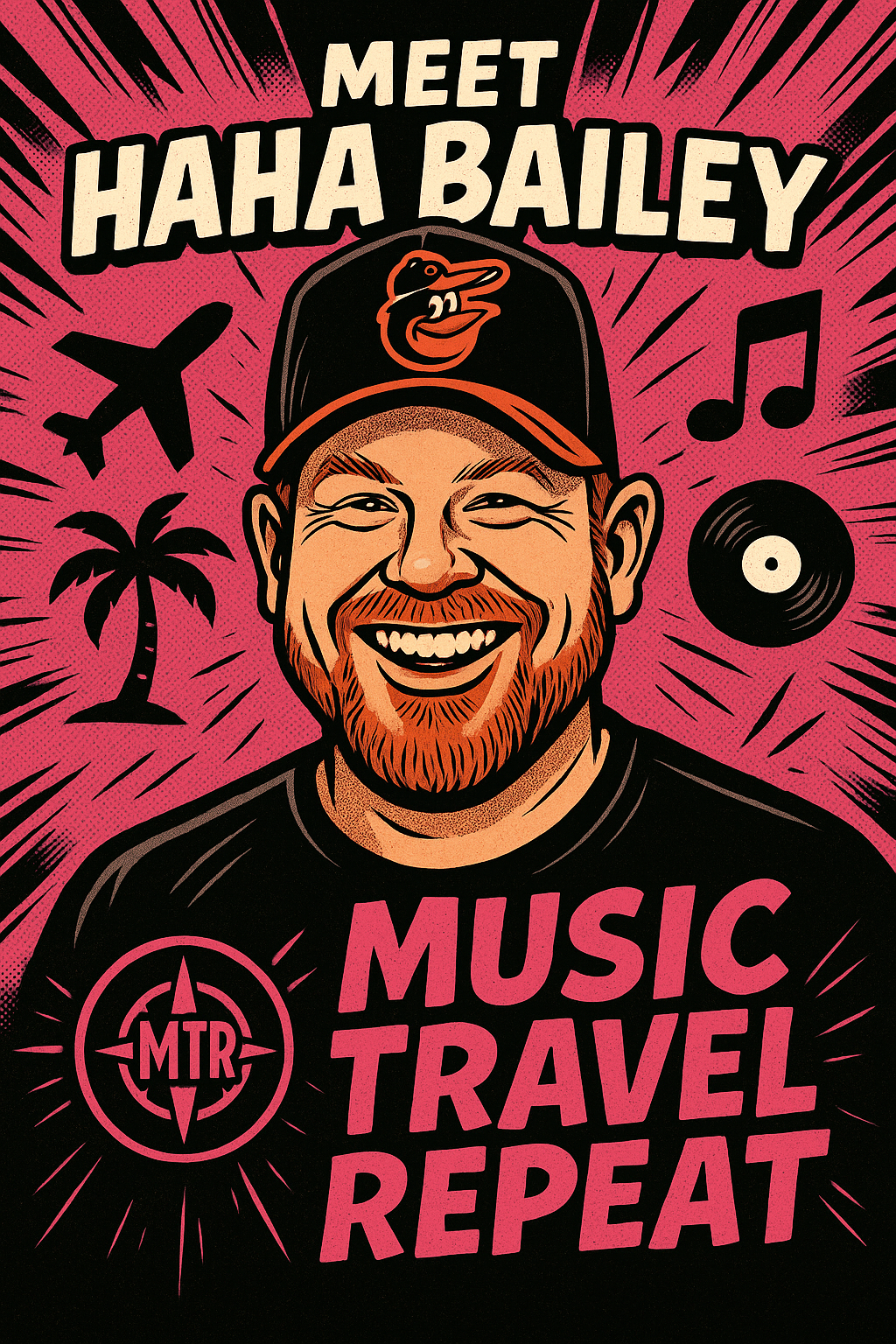
Every city Haha Bailey passes through leaves another story on his skin. From dim greenrooms to quiet highways, he’s learned that healing isn’t loud — it’s patient. His work on Music Travel Repeat speaks to the survivors, the lovers, and the late bloomers who keep trying anyway. Some stories are scars; his are proof they can still shine. Read The Restless, The Hopeful, and The Broken.